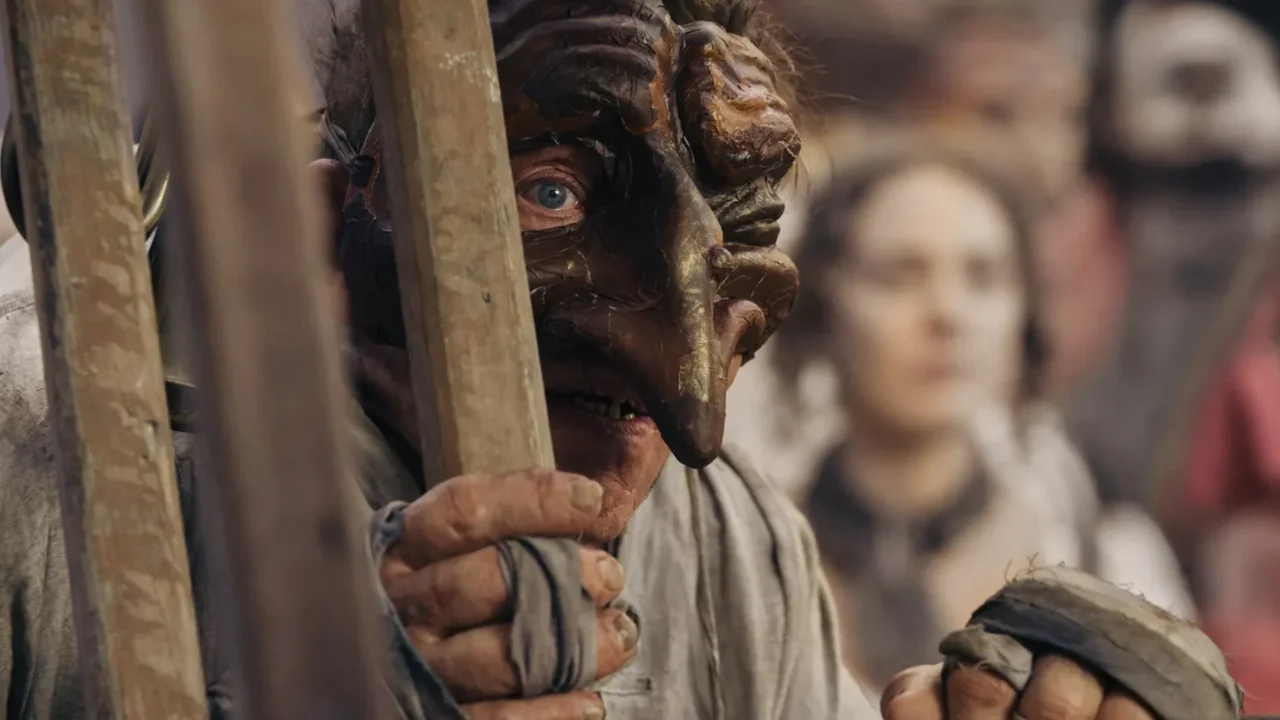
A new reimagining of Victor Hugo’s classic tale, The Hunchback, Soul of Paris, has dropped its first look. This marks a distinct shift from previous screen adaptations, which have ranged from lighthearted tragicomedies to Disney’s animated musical standard.
The narrative follows Quasimodo, the reclusive bell-ringer of Notre-Dame Cathedral, who becomes infatuated with Esmeralda, a street performer. Her presence draws the dangerous fixation of powerful men across Paris, triggering a cascade of jealousy and lethal consequences. While Hugo’s gothic narrative is not a pure horror story, Quasimodo’s tragic disfigurement and societal isolation helped invent the monster archetype that defined cinema for decades.
Richet’s adaptation approaches the material through a realistic historical lens. According to HorrorFuel, the project draws on archival research suggesting Victor Hugo modeled Quasimodo after a real-life nineteenth-century French stonemason. This historical grounding seeks to tap into the gothic roots of the original novel, emphasizing obsession and societal cruelty.
The character of Quasimodo has a long history in horror cinema. Universal Pictures previously released The Hunchback of Notre Dame starring Lon Chaney, establishing a cinematic bridge to classic creature features. Though often overshadowed by figures like Dracula and Frankenstein’s Monster, Quasimodo remains a foundational character in the genre’s legacy.
The new film is set to premiere on Netflix, though specific release dates and cast details have not been announced in the current reporting. The first look provides a visual preview of Richet’s interpretation, highlighting the dark urban atmosphere central to the story. For horror audiences, this adaptation offers a fresh perspective on a familiar tale, focusing on the macabre core of the original work rather than fantastical elements.